Guide
What the KP Index Actually Means (And Why We Check It Every Night)
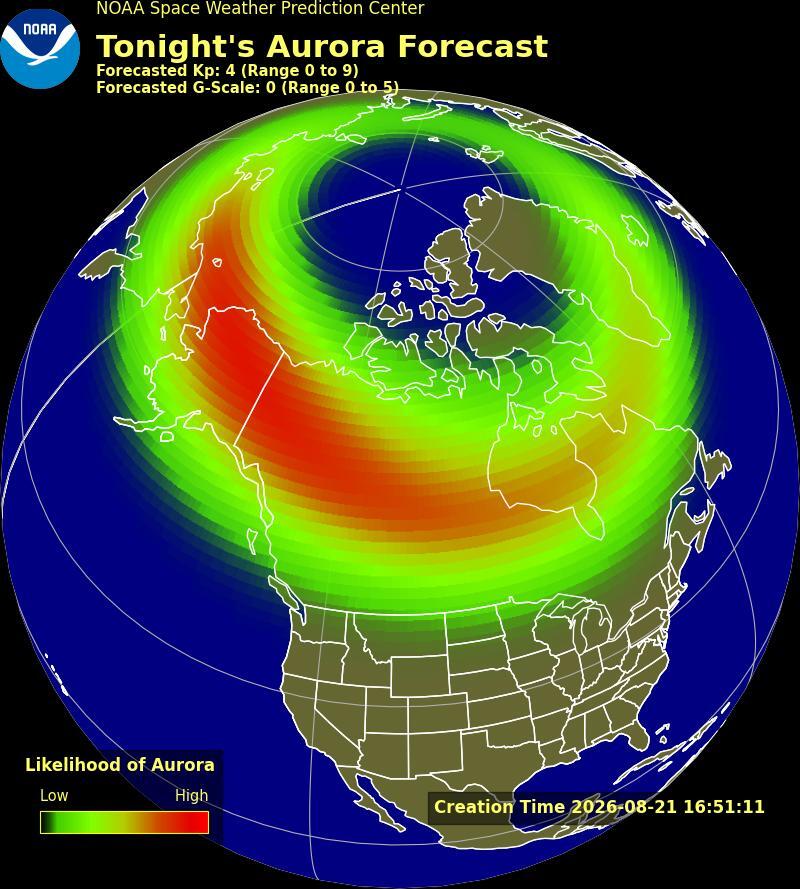
If you've spent any time looking up Northern Lights forecasts, you've seen the KP index — a number from 0 to 9, usually shown on a colored scale, promising to tell you whether tonight is a good night. Most people treat it like a weather forecast. It isn't quite that simple, and understanding why changes how you should actually plan a night out.
What KP actually measures
KP stands for "planetary K-index." It measures geomagnetic activity — essentially, how disturbed Earth's magnetic field is at a given moment, based on solar wind hitting the atmosphere. A higher KP number means a stronger geomagnetic storm, which pushes the aurora oval further south and makes it more intense.
That's it. It's a measure of geomagnetic disturbance, not a measure of whether you, standing in a specific field outside Rovaniemi, will see anything.
[PHOTO: aurora-kp-graph.jpg — screenshot or graphic of a KP index scale, alt text: "KP index scale showing geomagnetic activity levels"]
Why a high KP number can still mean nothing
Here's the part most forecasts don't explain well: KP tells you about the strength of the aurora, not whether it's visible from where you are. Two things can wreck a high-KP night entirely:
Cloud cover. The aurora happens roughly 100km above the ground. If there's a solid cloud layer between you and it, KP 6 looks identical to KP 0 — which is to say, nothing. This is the single biggest reason a "great forecast" night ends with people staring at grey sky.
Light pollution and moon phase. A full moon washes out fainter displays. City lights do the same thing at closer range. A KP 3 night with clear skies and no moon can outperform a KP 5 night under cloud or a bright moon.
This is why we don't build a night around the KP number alone. We check cloud cover forecasts for several different directions around Rovaniemi, cross-reference the KP forecast, and decide the actual route once we know where the sky is likely to be clearest — sometimes 10km from town, sometimes 150km.
What the color scale gets wrong
Most apps show KP on a green-to-red scale, implying red is "the target." In practice, most visible aurora activity in Rovaniemi happens at KP 2–4 — moderate, unremarkable-looking numbers. You don't need a geomagnetic storm to see something real. You need clear sky, darkness, and a guide who knows where to point the car.
High-KP nights (6+) are genuinely rare and often come with warnings of their own — sometimes so bright and fast-moving that photographing them well is actually harder, not easier, since the display changes faster than a long exposure can capture cleanly.
[PHOTO: aurora-moderate-kp.jpg — a real aurora shot taken on a moderate KP night, alt text: "Northern Lights visible over Rovaniemi on a moderate KP index night"]
What this means if you're planning a trip
Don't obsess over finding the one night with the highest predicted KP. Instead:
- Give yourself multiple nights if you can — 3 nights meaningfully beats 1, regardless of forecast
- Trust cloud cover forecasts as much as KP, maybe more
- Ask whoever's guiding you what they're actually checking, not just what number an app is showing
This is the actual mechanic behind why our tours don't run a fixed route — the real answer to "will we see it tonight" is built from several data points checked in real time, not one number glanced at that afternoon.
Planning a trip to Rovaniemi and want a straight answer about your dates? Get in touch — we're honest about the forecast before you book, not just after.